
Hardens the surface layer itself
The design targets resistance to peeling, cracking, water, alcohol, heat, abrasion, and mold by strengthening the surface layer rather than relying only on a film.
A plant-derived biodegradable penetrating-hardening polymer made by polymerizing pine resin and metal pigments. It penetrates the surface layer of wood and biomaterials, then hardens the material itself.
Remia is a plant-derived varnish for situations where wood must retain its appeal while gaining resistance to water, alcohol, heat, abrasion, and mold.
The name combines Resin, Metal, and the suffix ia. It reflects the calcified-colophonium material design that brings pine resin together with metal pigments.
Many plant- and mycelium-derived biomaterials are inherently vulnerable to water. Remia aims to address that weakness through a plant-derived penetrating-hardening approach.
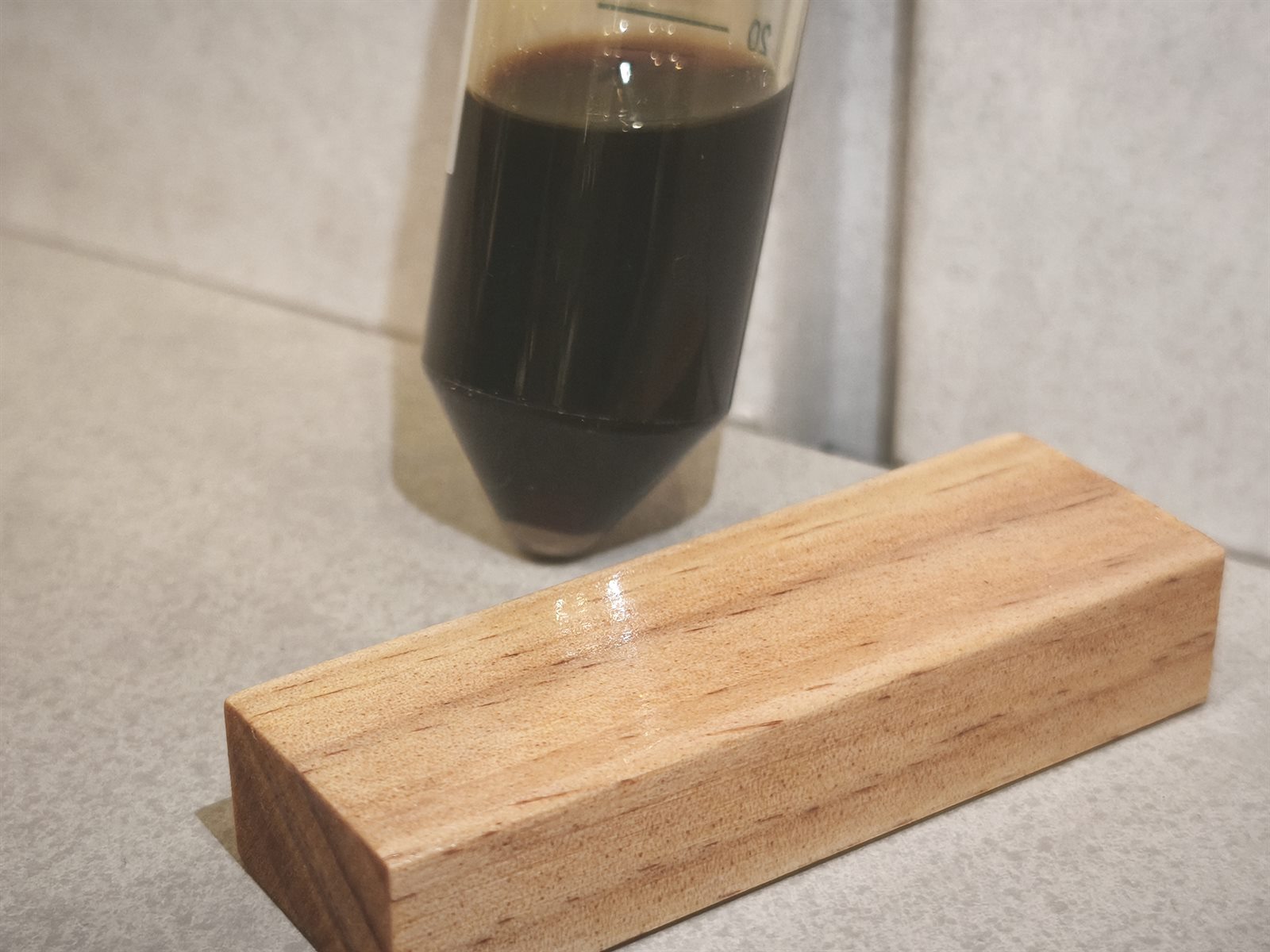
Conventional varnishes protect materials by placing a film on the surface. In harsh environments with frequent scratches and wear, that film can peel away and lose its protective function.
Remia penetrates into the surface structure of wood or bio-leather and then hardens. Instead of only adding a coating, it is designed to reinforce the surface layer of the material itself.
The design targets resistance to peeling, cracking, water, alcohol, heat, abrasion, and mold by strengthening the surface layer rather than relying only on a film.
A very thin application preserves the original look and feel. Layering creates a wet, refined gloss while the transparent black tone adds depth and restraint.
Remia uses only naturally derived ingredients, aiming for a protective material that does not depend on petroleum-derived resin or microplastic pathways.
The target price reflects the premium wood varnish market while adding value through plant-derived composition, non-petroleum design, heat resistance, and penetrating-hardening durability.
Contact APIA to discuss applications for wood, built-in furniture, bio-leather, or living-environment products.